
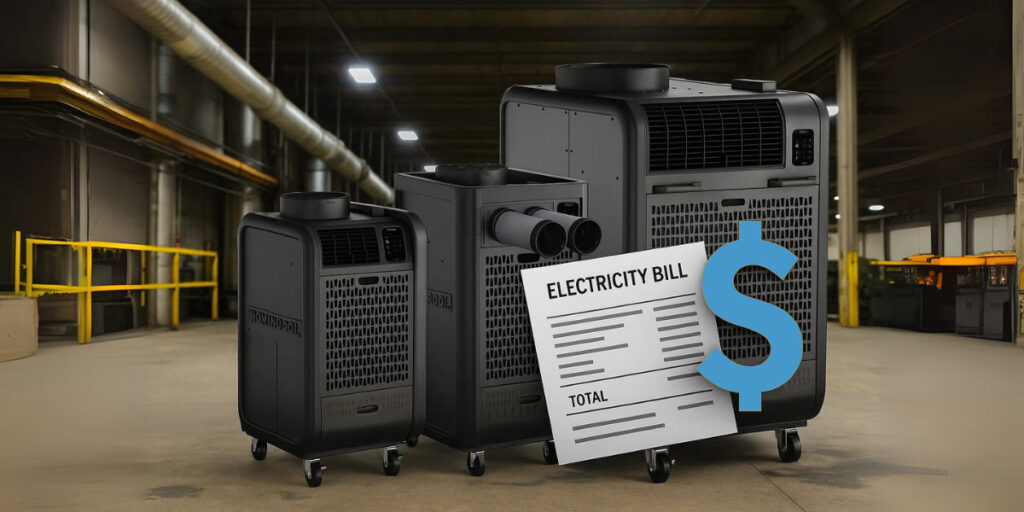
Portable air conditioners offer an excellent cooling solution for a wide range of environments, from server rooms and offices to warehouses and temporary job sites. They are versatile, mobile, and easy to install. But a common question for businesses and facility managers is how much it costs to run a portable A/C unit on a daily or monthly basis.
The answer depends on several factors, including the unit’s power consumption, usage patterns, and the environment in which it is being used. In this blog, we break down those elements and explain how MovinCool designs its units for energy-efficient operation to help reduce electricity bills over time.
Key Factors That Influence Operating Cost
1. Power Consumption
The wattage of a portable air conditioner is one of the most important factors in determining operating cost. A higher BTU rating typically means more power usage, although energy efficiency also plays a role. For example, a 14,000 BTU unit may use around 1.2 to 1.5 kilowatts per hour, depending on the model and energy efficiency rating.
2. Daily Usage Hours
The number of hours the unit runs each day will directly impact the total cost. A unit that runs for eight hours per day will naturally use more electricity than one running for only four hours.
3. Electricity Rate
Electricity costs vary by location and usage tier. In the United States, the average commercial electricity rate is around 13 to 15 cents per kilowatt-hour. Multiply this rate by the kilowatts consumed to calculate the daily or monthly cost.
4. Cooling Load and Environment
If a portable AC is used in a poorly insulated space or in extremely hot environments, it will need to work harder to maintain the desired temperature. This can increase energy consumption.
5. Unit Efficiency
Energy Efficiency Ratio (EER) and Combined Energy Efficiency Ratio (CEER) ratings help identify how much cooling is provided for each unit of electricity consumed. Higher EER values mean more efficient performance.
Benefits of Spot Cooling
Spot cooling is a targeted approach where cooling is focused only on specific zones or equipment rather than an entire room or building. This reduces the load on the AC unit and keeps energy consumption in check.
For example, rather than attempting to cool an entire warehouse, placing a portable unit near a workstation or machinery can save both energy and cost.
MovinCool specializes in spot cooling solutions that are designed for efficiency and easy deployment.
How MovinCool Reduces Energy Costs
1. High-Efficiency Components
MovinCool units are built with energy-efficient compressors, motors, and fans. These components are engineered for industrial-grade performance while keeping energy draw as low as possible.
2. Smart Airflow Design
Our units use optimized airflow systems to maximize air pathways with limited restrictions. This highly effective design offers more cooling per kilowatt consumed, especially in large spaces such as manufacturing facilities and server rooms.
3. Programmable Timers and Thermostats
MovinCool portable air conditioners come with programmable settings that allow users to schedule on-off times or maintain a specific temperature range. This avoids unnecessary operation and limits energy waste.
4. Minimal Installation Requirements
Because MovinCool systems are plug-and-play and do not require permanent ductwork or plumbing, installation is quick and setup costs are minimal. This contributes to an overall lower total cost of ownership.
You can explore our full line of portable air conditioners for Industries to find an energy-efficient option for your environment.
Practical Tips to Lower Electricity Usage
Use in Insulated Spaces Running a portable AC in a well-insulated room reduces how hard the unit has to work. Sealing windows, doors, and gaps can make a significant difference.
2. Clean Filters Regularly Dirty filters can restrict airflow and force the unit to consume more power. Clean filters allow for better performance and longer equipment life.
3. Avoid Overcooling Setting the thermostat too low can lead to unnecessary energy consumption. Maintain a comfortable temperature that balances cost and comfort.
4. Leverage Natural Shade Place your unit in shaded areas when possible. Reducing heat from direct sunlight makes the cooling process more efficient.
5. Monitor Usage Trends Track your energy bills or use a smart plug with energy monitoring to understand how much power the unit is using. This can help optimize run times.